Don’t Prioritize Being Nice
SUMMER 2026
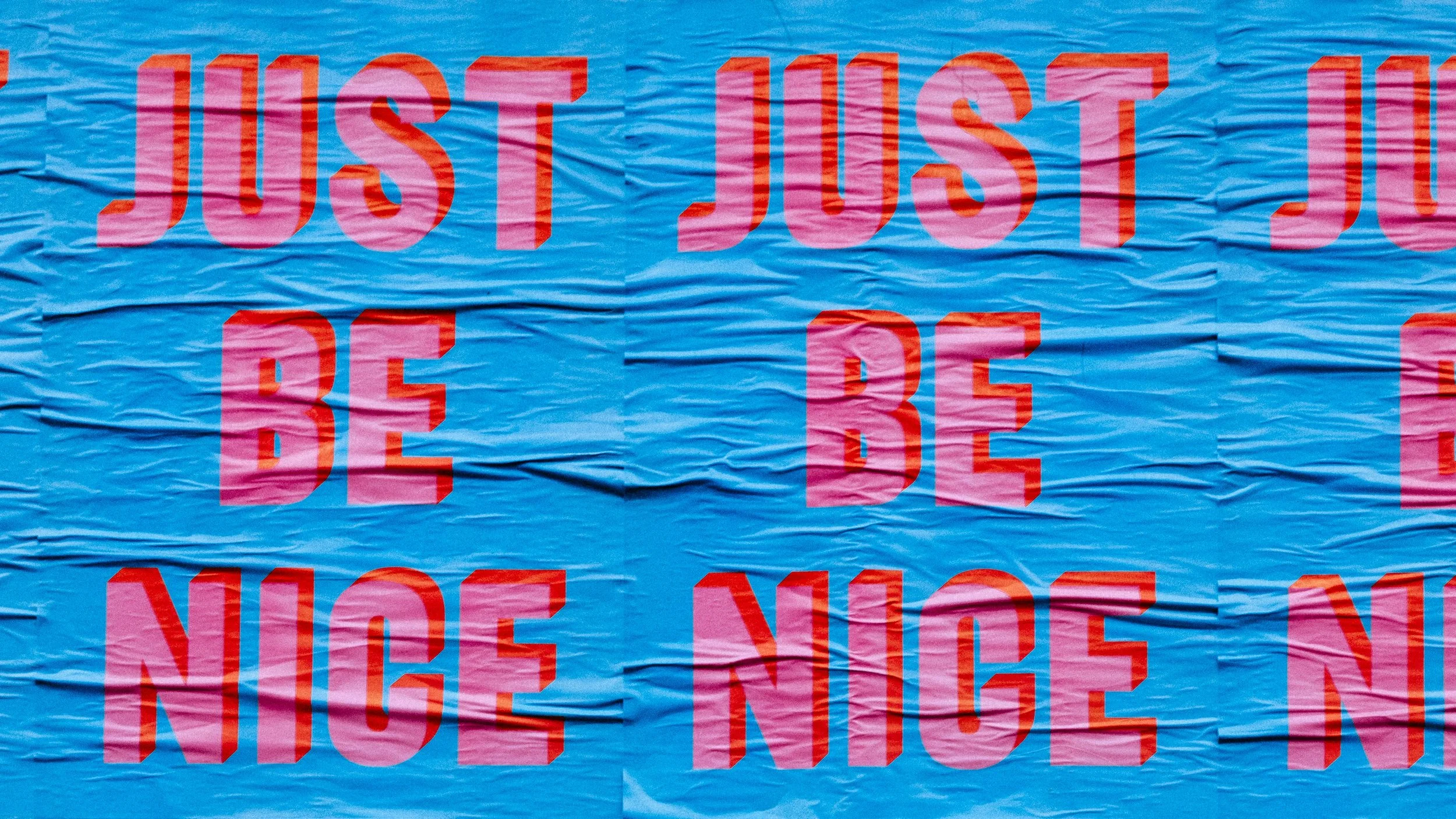
Photo by Samuel Regan-Asante
I’ve been told many times in my career I’m a blunt person. When someone asks me for my opinion, I give it. When I see a problem, I point it out. In pursuit and project post-mortems, I seem to say the elephant in the room without hesitation. If I’m involved in something and it’s taking my time, I’m going to speak candidly about the content, the decisions, and everything in between. It has gotten to the point that in a recent meeting, I joked “Do you actually want my feedback because people usually regret it after they ask me.”
Part of my honesty comes from the nature of my job. I help clients figure out the new product, service, or experience they should develop and launch into the world. There’s an unspoken aspect of my job that I didn’t discover until years in and it is rarely talked about. I’m a heartbreaker. I learned quickly that no white space, blue ocean, green field innovation project ever truly starts from zero. Even when the company has no idea what to do, individuals within always have ideas and hypotheses. And, as I quickly learned, my job is telling them their idea is not right. But that heartbreak ensures clients make the right things. I’m good at telling clients what they don’t want to hear. Where some consultants may nod, smile, and build exactly what you ask for (even if they suspect it will fail), I’m good at telling my clients hard truths. And where others focus on keeping the relationship 'nice’ at the cost of building the wrong thing, I don't believe in letting my clients walk off cliffs politely.
And despite my reputation as being a bit unfiltered, I’ve always found this a bit ironic because I do spend an absurd amount of time thinking about how I phrase what I say to ensure it comes off as, well, for lack of a better term, nice. And yet, despite this time and energy spent, the feedback I am blunt, or as a I like to put it, radically honest, still exists. It used to worry me. I worried I was perceived as difficult or mean. Or worse, a bitch. It led me to falsely believe that maybe I am. In passing to a coworker, I once remarked, “I’m not a nice person, but I don’t think I cross into asshole territory.” His response was enlightening, “You don't. I also wouldn't say you're not a nice person. You just value other things more than being nice. I think there's a difference.”
Ever since he said that to me, I’ve thought about it a lot. Why don’t I prioritize being “nice”? But more importantly, why has it become painful to watch those around me who do?
“Nice” is one of those vague words like “innovation” and “strategy” (yes, two words I use to describe what I do). “Nice” has so many meanings, it has become meaningless. In a work context, when I hear nice, I define it as cordial, considerate, collaborative. However, at its worst, and why I resent it so much, it means hiding the truth. In an effort to “not hurt someone’s feelings” or “not cause trouble,” people hide the truth. They may not lie, but they will omit, whitewash, or bury the lead. And I find this infuriating.
It seems, people are afraid to say the truth. It speaks to a work culture issue that happens across offices and companies. If someone doesn’t see how telling the truth will matter, why risk the potential consequences? The result is being honest feels like a calculation, rather than a default state.
This type of being nice comes with a cost. Issues go unresolved. The quality of work is worse because people are afraid of confrontation. People are blindsided when they don’t get promoted, or worse, when they get fired. How do we break this? Here’s my unsolicited (because that’s what it usually is) advice:
Come from a place of improvement, not malice
Being honest shouldn’t ever come from a place of malice. It should always come from a place of wanting to make things better, for everyone. And that’s the key. While I like to think I have a certain awkward, self-deprecating charm, I’m not nearly charismatic enough to have that carry my career. So how have a gotten away with it when it feels so counter to corporate culture? I truly believe it’s because I always come at it from a place of making this – the project, the team, the work – better for everyone, not just me. Whenever you are speaking the truth, always keep at the forefront why it’s important it be said out loud and how it will make everyone better.
Respect their time and get to the point
My biggest pet peeve is when I see someone tell a hard truth, but then bury the lead in niceties and fluff, causing the person on the receiving end to miss the point of what is being said. Respect a person’s time and intelligence. Rip the band-aid. And whenever possible, have these conversations face-to-face. Let them see in your expression and hear in your tone that your directness is, as stated above, coming from a place of making everything better and an act of partnership.
If you point out the problem, be part of the solution
It’s easy to be a contrarian. Anyone can be the wet blanket in the room and point out why something won’t work, why it’s a bad idea, or that something went wrong. But tearing an idea down without offering an alternative isn’t productive, it’s just complaining. When delivering a hard truth, bring a “yes, and” mentality. In improv, "yes, and" is about accepting what’s given and building on it. In delivering hard truths, it means validating the ambition or underlying intent, and then finding the path to make it work. When you couple your skepticism with alternative solutions, you stop being a roadblock and start being a navigator.
Instead, prioritize respect
We have entered a new era where making something real is easier than ever. The traditional barriers, typically the cost of development and resources, are no longer there. With that, we need honesty more than ever. It’s become all too easy for ideas to be brought to life, whether they should be or not. The excitement and optimism that comes with innovation needs to be balanced with thoughtful pushback and healthy skepticism to ensure we are actually making the right things real. As time and energy become our most valuable resources, we can’t afford to waste them on worrying about the political ramifications of telling the needed truth. I respect my clients and peers too much to watch potential missteps by defaulting to polite silence. At the end of the day, this isn’t about deprioritizing being nice, it’s about prioritizing respect.